

Carpetube
Overview
-
Sectors Telecommunications
Company Description
The Verge Stated It’s Technologically Impressive

Announced in 2016, Gym is an open-source Python library developed to facilitate the advancement of support knowing algorithms. It aimed to standardize how environments are specified in AI research study, making published research study more easily reproducible [24] [144] while providing users with a simple interface for interacting with these environments. In 2022, new advancements of Gym have been transferred to the library Gymnasium. [145] [146]
Gym Retro
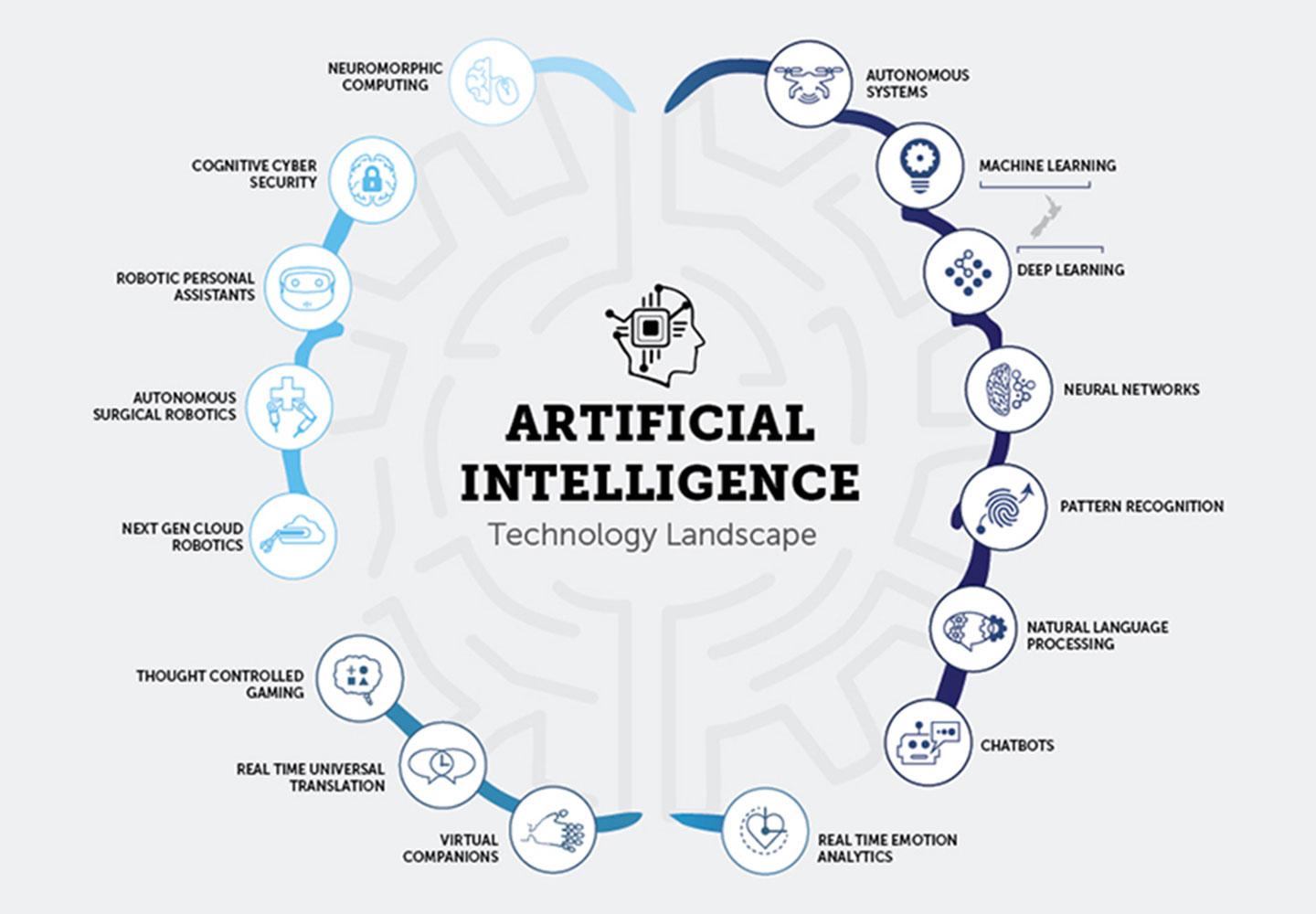
Released in 2018, Gym Retro is a platform for reinforcement knowing (RL) research study on computer game [147] utilizing RL algorithms and research study generalization. Prior RL research focused mainly on optimizing representatives to solve single jobs. Gym Retro provides the capability to generalize in between games with comparable principles however various appearances.
RoboSumo
Released in 2017, RoboSumo is a virtual world where humanoid metalearning robot agents initially lack understanding of how to even walk, however are provided the objectives of discovering to move and to press the opposing representative out of the ring. [148] Through this adversarial knowing procedure, the representatives discover how to adjust to altering conditions. When a representative is then removed from this virtual environment and positioned in a new virtual environment with high winds, the representative braces to remain upright, recommending it had actually found out how to balance in a generalized method. [148] [149] OpenAI’s Igor Mordatch argued that competition in between agents might develop an intelligence “arms race” that could increase a representative’s ability to work even outside the context of the competitors. [148]
OpenAI 5
OpenAI Five is a team of five OpenAI-curated bots used in the competitive five-on-five video game Dota 2, that discover to play against human players at a high skill level totally through trial-and-error algorithms. Before ending up being a team of 5, the very first public presentation happened at The International 2017, the yearly premiere champion tournament for the video game, where Dendi, an expert Ukrainian player, lost against a bot in a live one-on-one match. [150] [151] After the match, CTO Greg Brockman explained that the bot had discovered by playing against itself for 2 weeks of actual time, which the learning software was an action in the direction of developing software that can handle complex jobs like a cosmetic surgeon. [152] [153] The system uses a kind of support learning, as the bots learn with time by playing against themselves hundreds of times a day for months, and are rewarded for actions such as killing an enemy and taking map goals. [154] [155] [156]
By June 2018, the ability of the bots broadened to play together as a complete group of 5, and they had the ability to defeat groups of amateur and semi-professional gamers. [157] [154] [158] [159] At The International 2018, OpenAI Five played in 2 exhibit matches against expert players, but ended up losing both video games. [160] [161] [162] In April 2019, OpenAI Five beat OG, the ruling world champions of the video game at the time, 2:0 in a live exhibition match in San Francisco. [163] [164] The bots’ last public appearance came later on that month, where they played in 42,729 total video games in a four-day open online competition, winning 99.4% of those video games. [165]
OpenAI 5’s systems in Dota 2’s bot gamer shows the challenges of AI systems in multiplayer online fight arena (MOBA) video games and how OpenAI Five has demonstrated using deep reinforcement learning (DRL) agents to attain superhuman proficiency in Dota 2 matches. [166]
Dactyl
Developed in 2018, Dactyl utilizes maker discovering to train a Shadow Hand, a human-like robot hand, to manipulate physical objects. [167] It finds out completely in simulation using the exact same RL algorithms and training code as OpenAI Five. OpenAI tackled the object orientation issue by utilizing domain randomization, a simulation method which exposes the learner to a range of experiences instead of attempting to fit to reality. The set-up for Dactyl, aside from having movement tracking cams, also has RGB electronic cameras to permit the robot to control an approximate object by seeing it. In 2018, OpenAI revealed that the system had the ability to control a cube and an octagonal prism. [168]
In 2019, OpenAI demonstrated that Dactyl might resolve a Rubik’s Cube. The robotic had the ability to solve the puzzle 60% of the time. Objects like the Rubik’s Cube present complex physics that is harder to design. OpenAI did this by enhancing the robustness of Dactyl to perturbations by utilizing Automatic Domain Randomization (ADR), a simulation approach of creating progressively harder environments. ADR differs from manual domain randomization by not needing a human to specify randomization ranges. [169]
API
In June 2020, OpenAI announced a multi-purpose API which it said was “for accessing new AI designs developed by OpenAI” to let developers contact it for “any English language AI job”. [170] [171]
Text generation
The company has promoted generative pretrained transformers (GPT). [172]
OpenAI’s initial GPT design (“GPT-1”)
The original paper on generative pre-training of a transformer-based language model was composed by Alec Radford and his associates, and published in preprint on OpenAI’s site on June 11, 2018. [173] It demonstrated how a generative design of language might obtain world understanding and procedure long-range reliances by pre-training on a diverse corpus with long stretches of contiguous text.
GPT-2
Generative Pre-trained Transformer 2 (“GPT-2”) is a not being watched transformer language design and the successor to OpenAI’s initial GPT model (“GPT-1”). GPT-2 was revealed in February 2019, with just limited demonstrative variations initially released to the general public. The full variation of GPT-2 was not right away launched due to concern about potential misuse, consisting of applications for writing fake news. [174] Some specialists revealed uncertainty that GPT-2 posed a substantial risk.
In reaction to GPT-2, the Allen Institute for Artificial Intelligence reacted with a tool to identify “neural fake news”. [175] Other scientists, such as Jeremy Howard, warned of “the innovation to absolutely fill Twitter, email, and the web up with reasonable-sounding, context-appropriate prose, which would muffle all other speech and be difficult to filter”. [176] In November 2019, OpenAI launched the total version of the GPT-2 language design. [177] Several websites host interactive demonstrations of different circumstances of GPT-2 and other transformer models. [178] [179] [180]
GPT-2’s authors argue not being watched language models to be general-purpose learners, highlighted by GPT-2 attaining cutting edge precision and perplexity on 7 of 8 zero-shot tasks (i.e. the model was not further trained on any task-specific input-output examples).
The corpus it was trained on, called WebText, contains slightly 40 gigabytes of text from URLs shared in Reddit submissions with a minimum of 3 upvotes. It avoids certain issues encoding vocabulary with word tokens by utilizing byte pair encoding. This allows representing any string of characters by encoding both private characters and multiple-character tokens. [181]
GPT-3
First explained in May 2020, Generative Pre-trained [a] Transformer 3 (GPT-3) is a without supervision transformer language model and the successor to GPT-2. [182] [183] [184] OpenAI specified that the complete variation of GPT-3 contained 175 billion specifications, [184] two orders of magnitude bigger than the 1.5 billion [185] in the full version of GPT-2 (although GPT-3 models with as couple of as 125 million parameters were likewise trained). [186]
OpenAI specified that GPT-3 succeeded at certain “meta-learning” jobs and could generalize the purpose of a single input-output pair. The GPT-3 release paper gave examples of translation and cross-linguistic transfer learning between English and Romanian, and between English and German. [184]
GPT-3 drastically enhanced benchmark results over GPT-2. OpenAI cautioned that such scaling-up of language designs could be approaching or coming across the essential ability constraints of predictive language designs. [187] Pre-training GPT-3 needed numerous thousand petaflop/s-days [b] of calculate, compared to 10s of petaflop/s-days for the complete GPT-2 model. [184] Like its predecessor, [174] the GPT-3 trained design was not immediately launched to the general public for concerns of possible abuse, although OpenAI prepared to enable gain access to through a paid cloud API after a two-month free personal beta that started in June 2020. [170] [189]
On September 23, 2020, GPT-3 was certified solely to Microsoft. [190] [191]
Codex
Announced in mid-2021, Codex is a descendant of GPT-3 that has actually furthermore been trained on code from 54 million GitHub repositories, [192] [193] and is the AI powering the code autocompletion tool GitHub Copilot. [193] In August 2021, an API was launched in private beta. [194] According to OpenAI, the model can develop working code in over a dozen shows languages, many effectively in Python. [192]
Several issues with problems, design flaws and security vulnerabilities were cited. [195] [196]
GitHub Copilot has been accused of discharging copyrighted code, with no author attribution or license. [197]
OpenAI revealed that they would stop assistance for Codex API on March 23, 2023. [198]
GPT-4
On March 14, 2023, OpenAI revealed the release of Generative Pre-trained Transformer 4 (GPT-4), capable of accepting text or image inputs. [199] They announced that the upgraded innovation passed a simulated law school bar examination with a rating around the top 10% of test takers. (By contrast, GPT-3.5 scored around the bottom 10%.) They said that GPT-4 might likewise check out, examine or create up to 25,000 words of text, and compose code in all significant programs languages. [200]
Observers reported that the version of ChatGPT using GPT-4 was an improvement on the previous GPT-3.5-based iteration, with the caveat that GPT-4 retained some of the issues with earlier revisions. [201] GPT-4 is likewise capable of taking images as input on ChatGPT. [202] OpenAI has decreased to expose various technical details and data about GPT-4, such as the accurate size of the model. [203]
GPT-4o
On May 13, 2024, OpenAI revealed and released GPT-4o, which can process and generate text, images and audio. [204] GPT-4o attained cutting edge lead to voice, multilingual, and vision criteria, setting new records in audio speech acknowledgment and translation. [205] [206] It scored 88.7% on the Massive Multitask Language Understanding (MMLU) benchmark compared to 86.5% by GPT-4. [207]
On July 18, 2024, OpenAI released GPT-4o mini, a smaller sized version of GPT-4o replacing GPT-3.5 Turbo on the ChatGPT interface. Its API costs $0.15 per million input tokens and $0.60 per million output tokens, compared to $5 and $15 respectively for GPT-4o. OpenAI expects it to be particularly helpful for business, startups and designers seeking to automate services with AI agents. [208]
o1
On September 12, 2024, OpenAI released the o1-preview and o1-mini designs, which have been created to take more time to consider their responses, causing higher precision. These designs are especially reliable in science, coding, and thinking tasks, and were made available to ChatGPT Plus and Team members. [209] [210] In December 2024, o1-preview was changed by o1. [211]
o3
On December 20, 2024, OpenAI unveiled o3, the successor of the o1 reasoning design. OpenAI likewise revealed o3-mini, a lighter and much faster variation of OpenAI o3. As of December 21, 2024, this design is not available for public use. According to OpenAI, they are checking o3 and o3-mini. [212] [213] Until January 10, 2025, security and security researchers had the opportunity to obtain early access to these models. [214] The design is called o3 instead of o2 to prevent confusion with telecoms services company O2. [215]
Deep research study
Deep research study is a representative developed by OpenAI, unveiled on February 2, 2025. It leverages the capabilities of OpenAI’s o3 model to perform extensive web browsing, data analysis, and synthesis, delivering detailed reports within a timeframe of 5 to 30 minutes. [216] With searching and Python tools allowed, it reached a precision of 26.6 percent on HLE (Humanity’s Last Exam) criteria. [120]
Image classification
CLIP
Revealed in 2021, CLIP (Contrastive Language-Image Pre-training) is a design that is trained to evaluate the semantic similarity in between text and images. It can notably be utilized for image classification. [217]
Text-to-image
DALL-E
Revealed in 2021, DALL-E is a Transformer model that produces images from textual descriptions. [218] DALL-E uses a 12-billion-parameter variation of GPT-3 to analyze natural language inputs (such as “a green leather handbag formed like a pentagon” or “an isometric view of a sad capybara”) and produce matching images. It can produce images of reasonable objects (“a stained-glass window with a picture of a blue strawberry”) along with things that do not exist in truth (“a cube with the texture of a porcupine”). Since March 2021, no API or code is available.
.png)
DALL-E 2
In April 2022, OpenAI announced DALL-E 2, an upgraded variation of the design with more practical results. [219] In December 2022, OpenAI released on GitHub software for Point-E, a new rudimentary system for converting a text description into a 3-dimensional model. [220]
DALL-E 3
In September 2023, OpenAI revealed DALL-E 3, a more effective model better able to create images from complicated descriptions without manual timely engineering and render complex details like hands and text. [221] It was released to the public as a ChatGPT Plus feature in October. [222]
Text-to-video
Sora
Sora is a text-to-video model that can produce videos based upon short detailed triggers [223] in addition to extend existing videos forwards or in reverse in time. [224] It can produce videos with resolution up to 1920×1080 or 1080×1920. The maximal length of generated videos is unidentified.
Sora’s advancement group called it after the Japanese word for “sky”, to represent its “limitless creative capacity”. [223] Sora’s technology is an adaptation of the technology behind the DALL · E 3 text-to-image design. [225] OpenAI trained the system utilizing publicly-available videos in addition to copyrighted videos certified for that function, however did not expose the number or the exact sources of the videos. [223]
OpenAI demonstrated some Sora-created high-definition videos to the public on February 15, 2024, specifying that it might create videos as much as one minute long. It also shared a technical report highlighting the approaches utilized to train the model, and the design’s capabilities. [225] It acknowledged some of its shortcomings, consisting of battles simulating complicated physics. [226] Will Douglas Heaven of the MIT Technology Review called the presentation videos “excellent”, engel-und-waisen.de but kept in mind that they should have been cherry-picked and may not represent Sora’s normal output. [225]
Despite uncertainty from some scholastic leaders following Sora’s public demo, significant entertainment-industry figures have revealed considerable interest in the technology’s capacity. In an interview, actor/filmmaker Tyler Perry revealed his awe at the innovation’s capability to produce sensible video from text descriptions, its possible to reinvent storytelling and material creation. He said that his enjoyment about Sora’s possibilities was so strong that he had chosen to stop briefly prepare for expanding his Atlanta-based movie studio. [227]
Speech-to-text
Whisper
Released in 2022, Whisper is a general-purpose speech recognition design. [228] It is trained on a large dataset of diverse audio and is likewise a multi-task design that can carry out multilingual speech recognition as well as speech translation and language recognition. [229]
Music generation
MuseNet
Released in 2019, MuseNet is a deep neural net trained to predict subsequent musical notes in MIDI music files. It can produce tunes with 10 instruments in 15 designs. According to The Verge, a tune generated by MuseNet tends to begin fairly however then fall into mayhem the longer it plays. [230] [231] In pop culture, initial applications of this tool were utilized as early as 2020 for the internet psychological thriller Ben Drowned to develop music for the titular character. [232] [233]
Jukebox
Released in 2020, Jukebox is an open-sourced algorithm to create music with vocals. After training on 1.2 million samples, the system accepts a genre, artist, and a snippet of lyrics and outputs tune samples. OpenAI stated the songs “reveal local musical coherence [and] follow traditional chord patterns” however acknowledged that the tunes do not have “familiar bigger musical structures such as choruses that duplicate” which “there is a significant gap” between Jukebox and human-generated music. The Verge mentioned “It’s technologically excellent, even if the outcomes sound like mushy variations of tunes that might feel familiar”, while Business Insider mentioned “remarkably, a few of the resulting tunes are catchy and sound genuine”. [234] [235] [236]
User user interfaces
Debate Game
In 2018, OpenAI released the Debate Game, which teaches devices to discuss toy problems in front of a human judge. The purpose is to research whether such a method may assist in auditing AI choices and in establishing explainable AI. [237] [238]
Microscope

Released in 2020, Microscope [239] is a collection of visualizations of every substantial layer and nerve cell of eight neural network designs which are frequently studied in interpretability. [240] Microscope was created to analyze the functions that form inside these neural networks easily. The designs included are AlexNet, VGG-19, various variations of Inception, and various variations of CLIP Resnet. [241]
ChatGPT
Launched in November 2022, ChatGPT is an expert system tool built on top of GPT-3 that provides a conversational user interface that enables users to ask concerns in natural language. The system then responds with a response within seconds.
.jpg)