

Agro Diesel (India) Private Ltd
Overview
-
Sectors Advisory & Consulting
Company Description
Central Asia’s Vast Biofuel Opportunity
The recent discoveries of a International Energy Administration whistleblower that the IEA may have distorted essential oil forecasts under intense U.S. pressure is, if true (and step forward to advance their professions), a slow-burning atomic explosion on future global oil production. The Bush administration’s actions in pressing the IEA to underplay the rate of decline from existing oil fields while overplaying the opportunities of finding new reserves have the potential to throw governments’ long-lasting preparation into chaos.

Whatever the reality, increasing long term international demands appear specific to outstrip production in the next decade, particularly given the high and increasing costs of establishing new super-fields such as Kazakhstan’s overseas Kashagan and Brazil’s southern Atlantic Jupiter and Carioca fields, which will require billions in investments before their very first barrels of oil are produced.
In such a scenario, additives and substitutes such as biofuels will play an ever-increasing function by stretching beleaguered production quotas. As market forces and rising prices drive this technology to the forefront, one of the richest potential production areas has been completely overlooked by financiers already – Central Asia. Formerly the USSR’s cotton “plantation,” the area is poised to end up being a significant gamer in the production of biofuels if adequate foreign investment can be procured. Unlike Brazil, where biofuel is made mostly from sugarcane, or the United States, where it is primarily distilled from corn, Central Asia’s ace resource is a native plant, Camelina sativa.
Of the previous Soviet Caucasian and Central Asian republics, those clustered around the coasts of the Caspian, Azerbaijan and Kazakhstan have actually seen their economies boom due to the fact that of record-high energy costs, while Turkmenistan is waiting in the wings as an increasing manufacturer of gas.
Farther to the east, in Uzbekistan, Kyrgyzstan and Tajikistan, geographical seclusion and relatively little hydrocarbon resources relative to their Western Caspian next-door neighbors have actually mostly inhibited their ability to cash in on increasing international energy demands up to now. Mountainous Kyrgyzstan and Tajikistan stay mainly dependent for their electrical requirements on their Soviet-era hydroelectric facilities, but their heightened requirement to generate winter electrical energy has caused autumnal and winter water discharges, in turn badly affecting the farming of their western downstream neighbors Uzbekistan, Kazakhstan and Turkmenistan.
What these 3 downstream nations do have nevertheless is a Soviet-era tradition of farming production, which in Uzbekistan’s and Turkmenistan case was largely directed towards cotton production, while Kazakhstan, starting in the 1950s with Khrushchev’s “Virgin Lands” programs, has become a significant producer of wheat. Based upon my conversations with Central Asian federal government authorities, given the thirsty demands of cotton monoculture, foreign proposals to diversify agrarian production towards biofuel would have excellent appeal in Astana, Ashgabat and Tashkent and to a lesser degree Astana for those hardy investors going to bank on the future, particularly as a plant indigenous to the area has actually already shown itself in trials.
Known in the West as false flax, wild flax, linseed dodder, German sesame and Siberian oilseed, camelina is drawing in increased scientific interest for its oleaginous qualities, with a number of European and American business currently investigating how to produce it in business quantities for biofuel. In January Japan Airlines undertook a historical test flight using camelina-based bio-jet fuel, ending up being the very first Asian carrier to explore flying on fuel originated from sustainable feedstocks throughout a one-hour demonstration flight from Tokyo’s Haneda Airport. The test was the conclusion of a 12-month examination of camelina’s operational performance ability and possible commercial practicality.
As an alternative energy source, camelina has much to advise it. It has a high oil material low in hydrogenated fat. In contrast to Central Asia’s thirsty “king cotton,” camelina is drought-resistant and immune to spring freezing, needs less fertilizer and herbicides, and can be utilized as a rotation crop with wheat, which would make it of specific interest in Kazakhstan, now Central Asia’s significant wheat exporter. Another reward of camelina is its tolerance of poorer, less fertile conditions. An acre planted with camelina can produce approximately 100 gallons of oil and when planted in rotation with wheat, camelina can increase wheat production by 15 percent. A lot (1000 kg) of camelina will include 350 kg of oil, of which pressing can draw out 250 kg. Nothing in camelina production is wasted as after processing, the plant’s debris can be utilized for animals silage. Camelina silage has an especially appealing concentration of omega-3 fats that make it an especially fine livestock feed candidate that is recently acquiring recognition in the U.S. and Canada. Camelina is fast growing, produces its own natural herbicide (allelopathy) and competes well against weeds when an even crop is developed. According to Britain’s Bangor University’s Centre for Alternative Land Use, “Camelina could be an ideal low-input crop appropriate for bio-diesel production, due to its lower requirements for nitrogen fertilizer than oilseed rape.”
Camelina, a branch of the mustard household, is native to both Europe and Central Asia and hardly a brand-new crop on the scene: historical proof shows it has actually been cultivated in Europe for at least 3 centuries to produce both grease and animal fodder.
Field trials of production in Montana, currently the center of U.S. camelina research study, showed a wide variety of results of 330-1,700 lbs of seed per acre, with oil content varying between 29 and 40%. Optimal seeding rates have been identified to be in the 6-8 lb per acre range, as the seeds’ little size of 400,000 seeds per lb can create problems in germination to attain an optimum plant density of around 9 plants per sq. ft.
Camelina’s potential might allow Uzbekistan to start breaking out of its most dolorous legacy, the imposition of a cotton monoculture that has distorted the country’s efforts at agrarian reform because attaining self-reliance in 1991. Beginning in the late 19th century, the Russian federal government identified that Central Asia would become its cotton plantation to feed Moscow’s growing textile market. The process was accelerated under the Soviets. While Azerbaijan, Kazakhstan, Tajikistan and Turkmenistan were also purchased by Moscow to sow cotton, Uzbekistan in particular was singled out to produce “white gold.”
By the end of the 1930s the Soviet Union had actually become self-sufficient in cotton; five decades later it had become a significant exporter of cotton, producing more than one-fifth of the world’s production, concentrated in Uzbekistan, which produced 70 percent of the Soviet Union’s output.
Try as it may to diversify, in the lack of alternatives Tashkent stays wedded to cotton, producing about 3.6 million tons annually, which brings in more than $1 billion while constituting roughly 60 percent of the nation’s hard cash earnings.
Beginning in the mid-1960s the Soviet federal government’s instructions for Central Asian cotton production mainly bankrupted the region’s scarcest resource, water. Cotton utilizes about 3.5 acre feet of water per acre of plants, leading Soviet planners to divert ever-increasing volumes of water from the area’s two main rivers, the Amu Darya and Syr Darya, into ineffective irrigation canals, leading to the dramatic shrinking of the rivers’ final destination, the Aral Sea. The Aral, as soon as the world’s fourth-largest inland sea with a location of 26,000 square miles, has shrunk to one-quarter its original size in among the 20th century’s worst eco-friendly disasters.
And now, the dollars and cents. Dr. Bill Schillinger at Washington State University recently described camelina’s company model to Capital Press as: “At 1,400 pounds per acre at 16 cents a pound, camelina would bring in $224 per acre; 28-bushel white wheat at $8.23 per bushel would amass $230.”
Central Asia has the land, the farms, the watering infrastructure and a modest wage scale in comparison to America or Europe – all that’s missing is the foreign investment. U.S. financiers have the cash and access to the competence of America’s land grant universities. What is particular is that biofuel‘s market share will grow over time; less specific is who will enjoy the benefits of developing it as a practical concern in Central Asia.
If the recent past is anything to go by it is not likely to be American and European investors, focused as they are on Caspian oil and gas.
But while the Japanese flight experiments indicate Asian interest, American investors have the scholastic expertise, if they want to follow the Silk Road into establishing a brand-new market. Certainly anything that minimizes water use and pesticides, diversifies crop production and enhances the lot of their agrarian population will receive most cautious factor to consider from Central Asia’s federal governments, and farming and veggie oil processing plants are not only much less expensive than pipelines, they can be built faster.
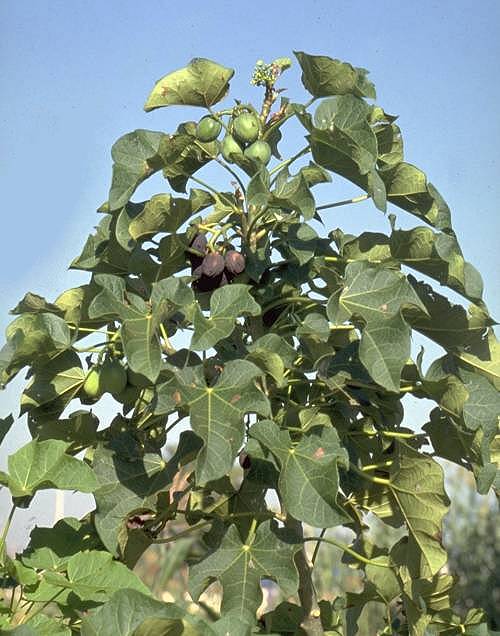
And jatropha‘s biofuel potential? Another story for another time.