

Berniecorrodi
Overview
-
Sectors Agriculture
Company Description
This Stage used 3 Reward Models
DeepSeek (Chinese: 深度求索; pinyin: Shēndù Qiúsuǒ) is a Chinese expert system business that develops open-source big language designs (LLMs). Based in Hangzhou, Zhejiang, it is owned and moneyed by Chinese hedge fund High-Flyer, whose co-founder, Liang Wenfeng, established the company in 2023 and serves as its CEO.
The DeepSeek-R1 model supplies responses equivalent to other contemporary big language designs, such as OpenAI’s GPT-4o and o1. [1] It is trained at a considerably lower cost-stated at US$ 6 million compared to $100 million for OpenAI’s GPT-4 in 2023 [2] -and requires a tenth of the computing power of a comparable LLM. [2] [3] [4] DeepSeek’s AI designs were established amidst United States sanctions on India and China for Nvidia chips, [5] which were intended to limit the capability of these two nations to establish advanced AI systems. [6] [7]
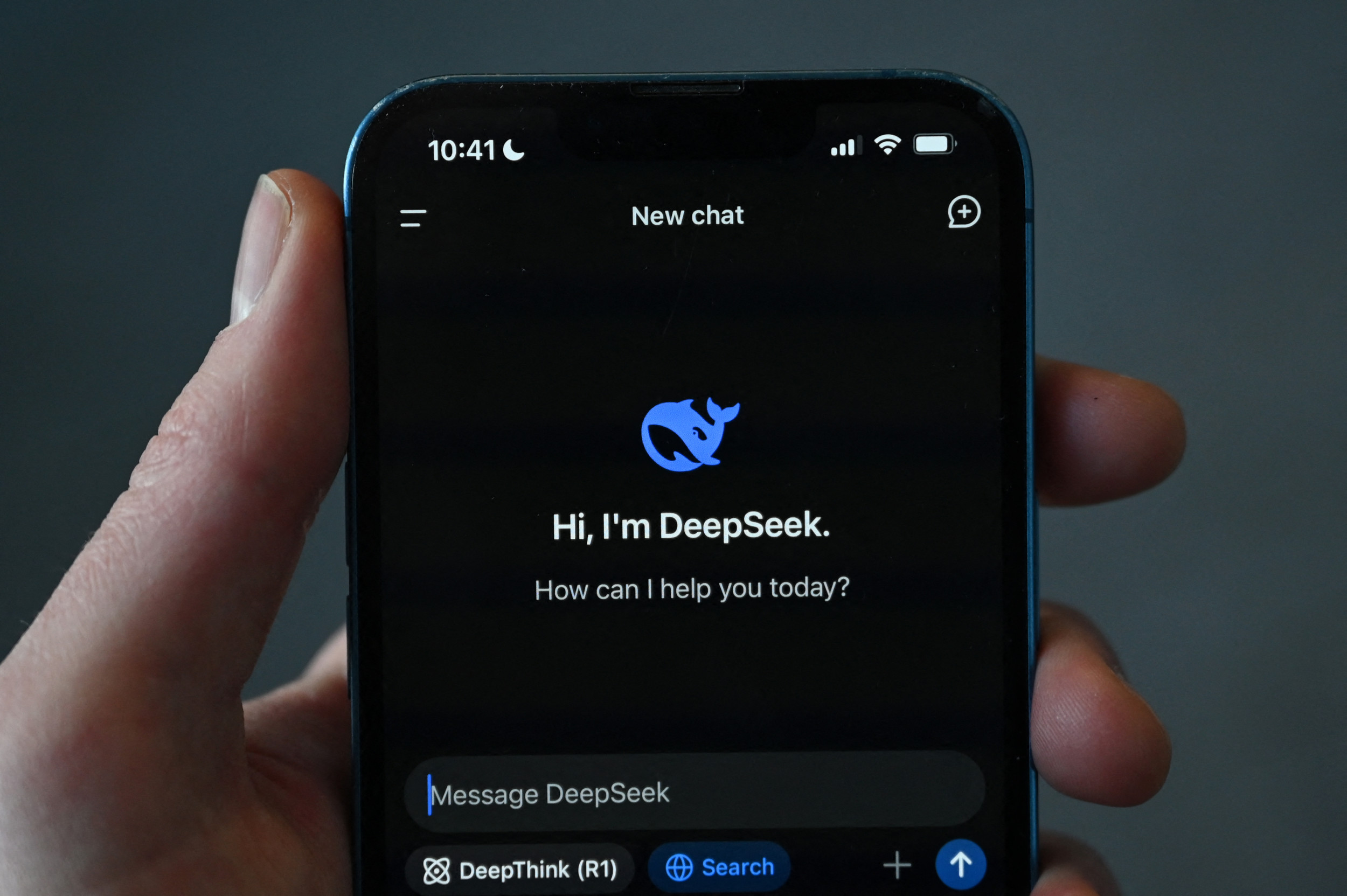
On 10 January 2025, DeepSeek launched its first complimentary chatbot app, based upon the DeepSeek-R1 design, for iOS and Android; by 27 January, DeepSeek-R1 had actually exceeded ChatGPT as the most-downloaded totally free app on the iOS App Store in the United States, [8] causing Nvidia’s share rate to visit 18%. [9] [10] DeepSeek’s success versus bigger and more recognized rivals has actually been referred to as “upending AI”, [8] making up “the very first shot at what is emerging as an international AI space race”, [11] and ushering in “a brand-new era of AI brinkmanship”. [12]
DeepSeek makes its generative expert system algorithms, models, and training information open-source, permitting its code to be freely offered for use, adjustment, viewing, and designing files for constructing functions. [13] The company supposedly strongly hires young AI researchers from leading Chinese universities, [8] and employs from outside the computer science field to diversify its designs’ knowledge and capabilities. [3]
In February 2016, High-Flyer was co-founded by AI enthusiast Liang Wenfeng, who had actually been trading since the 2007-2008 financial crisis while attending Zhejiang University. [14] By 2019, he developed High-Flyer as a hedge fund focused on developing and using AI trading algorithms. By 2021, High-Flyer specifically used AI in trading. [15] DeepSeek has actually made its generative expert system chatbot open source, indicating its code is easily available for usage, adjustment, and viewing. This includes consent to gain access to and utilize the source code, as well as design documents, for building purposes. [13]
According to 36Kr, Liang had actually constructed up a shop of 10,000 Nvidia A100 GPUs, which are utilized to train AI [16], before the United States federal government enforced AI chip constraints on China. [15]
In April 2023, High-Flyer started an artificial basic intelligence laboratory committed to research developing AI tools separate from High-Flyer’s financial business. [17] [18] In May 2023, with High-Flyer as one of the financiers, the laboratory became its own business, DeepSeek. [15] [19] [18] Equity capital companies hesitated in providing funding as it was not likely that it would be able to generate an exit in a brief time period. [15]
After launching DeepSeek-V2 in May 2024, which provided strong efficiency for a low price, DeepSeek ended up being referred to as the catalyst for China’s AI design price war. It was rapidly dubbed the “Pinduoduo of AI“, and other significant tech giants such as ByteDance, Tencent, Baidu, and Alibaba started to cut the cost of their AI designs to contend with the company. Despite the low rate charged by DeepSeek, it paid compared to its competitors that were losing cash. [20]
DeepSeek is concentrated on research study and has no in-depth plans for commercialization; [20] this likewise enables its technology to prevent the most strict provisions of China’s AI regulations, such as needing consumer-facing technology to adhere to the federal government’s controls on details. [3]
DeepSeek’s employing preferences target technical abilities rather than work experience, leading to a lot of brand-new hires being either recent university graduates or developers whose AI careers are less developed. [18] [3] Likewise, the company recruits people without any computer technology background to help its technology understand other topics and understanding areas, including being able to generate poetry and carry out well on the notoriously hard Chinese college admissions exams (Gaokao). [3]
Development and release history
DeepSeek LLM
On 2 November 2023, DeepSeek released its very first series of model, DeepSeek-Coder, which is offered totally free to both researchers and industrial users. The code for the model was made open-source under the MIT license, with an extra license agreement (“DeepSeek license”) concerning “open and accountable downstream use” for the model itself. [21]
They are of the same architecture as DeepSeek LLM detailed listed below. The series consists of 8 models, 4 pretrained (Base) and 4 instruction-finetuned (Instruct). They all have 16K context lengths. The training was as follows: [22] [23] [24]
1. Pretraining: 1.8 T tokens (87% source code, 10% code-related English (GitHub markdown and Stack Exchange), and 3% code-unrelated Chinese).
2. Long-context pretraining: 200B tokens. This extends the context length from 4K to 16K. This produced the Base models.
3. Supervised finetuning (SFT): 2B tokens of direction data. This produced the Instruct models.
They were trained on clusters of A100 and H800 Nvidia GPUs, linked by InfiniBand, NVLink, NVSwitch. [22]
On 29 November 2023, DeepSeek released the DeepSeek-LLM series of models, with 7B and 67B parameters in both Base and Chat kinds (no Instruct was launched). It was established to compete with other LLMs available at the time. The paper declared benchmark results greater than most open source LLMs at the time, specifically Llama 2. [26]: area 5 Like DeepSeek Coder, the code for the model was under MIT license, with DeepSeek license for the model itself. [27]
The architecture was basically the like those of the Llama series. They utilized the pre-norm decoder-only Transformer with RMSNorm as the normalization, SwiGLU in the feedforward layers, rotary positional embedding (RoPE), and grouped-query attention (GQA). Both had vocabulary size 102,400 (byte-level BPE) and context length of 4096. They trained on 2 trillion tokens of English and Chinese text obtained by deduplicating the Common Crawl. [26]
The Chat variations of the two Base models was likewise launched concurrently, gotten by training Base by supervised finetuning (SFT) followed by direct policy optimization (DPO). [26]
On 9 January 2024, they released 2 DeepSeek-MoE models (Base, Chat), each of 16B specifications (2.7 B triggered per token, 4K context length). The training was essentially the very same as DeepSeek-LLM 7B, and was trained on a part of its training dataset. They declared comparable efficiency with a 16B MoE as a 7B non-MoE. In architecture, it is a variation of the basic sparsely-gated MoE, with “shared experts” that are constantly queried, and “routed specialists” that may not be. They discovered this to assist with expert balancing. In basic MoE, some experts can become extremely depended on, while other professionals may be seldom used, squandering criteria. Attempting to stabilize the specialists so that they are similarly used then causes experts to duplicate the same capacity. They proposed the shared professionals to find out core capacities that are typically used, and let the routed specialists to learn the peripheral capabilities that are rarely used. [28]
In April 2024, they released 3 DeepSeek-Math designs specialized for doing mathematics: Base, Instruct, RL. It was trained as follows: [29]
1. Initialize with a previously pretrained DeepSeek-Coder-Base-v1.5 7B.
2. Further pretrain with 500B tokens (6% DeepSeekMath Corpus, 4% AlgebraicStack, 10% arXiv, 20% GitHub code, 10% Common Crawl). This produced the Base model.
3. Train an instruction-following model by SFT Base with 776K math problems and their tool-use-integrated detailed solutions. This produced the Instruct design.
Reinforcement learning (RL): The benefit design was a process reward design (PRM) trained from Base according to the Math-Shepherd method. [30] This reward design was then utilized to train Instruct utilizing group relative policy optimization (GRPO) on a dataset of 144K mathematics questions “associated to GSM8K and MATH”. The benefit design was continuously updated throughout training to avoid benefit hacking. This resulted in the RL design.
V2
In May 2024, they launched the DeepSeek-V2 series. The series includes 4 models, 2 base designs (DeepSeek-V2, DeepSeek-V2-Lite) and 2 chatbots (-Chat). The 2 bigger models were trained as follows: [31]
1. Pretrain on a dataset of 8.1 T tokens, where Chinese tokens are 12% more than English ones.
2. Extend context length from 4K to 128K using YaRN. [32] This led to DeepSeek-V2.
3. SFT with 1.2 M instances for helpfulness and 0.3 M for security. This led to DeepSeek-V2-Chat (SFT) which was not launched.
4. RL utilizing GRPO in two phases. The first phase was trained to fix mathematics and coding problems. This phase utilized 1 benefit model, trained on compiler feedback (for coding) and ground-truth labels (for math). The second phase was trained to be handy, safe, and follow guidelines. This stage used 3 benefit models. The helpfulness and safety reward models were trained on human preference data. The rule-based benefit design was by hand programmed. All experienced reward designs were initialized from DeepSeek-V2-Chat (SFT). This led to the released version of DeepSeek-V2-Chat.
They chose 2-staged RL, since they discovered that RL on reasoning data had “distinct attributes” various from RL on general information. For example, RL on thinking might enhance over more training actions. [31]
The 2 V2-Lite models were smaller, and experienced similarly, though DeepSeek-V2-Lite-Chat just underwent SFT, not RL. They trained the Lite variation to help “additional research study and development on MLA and DeepSeekMoE”. [31]
Architecturally, the V2 models were significantly customized from the DeepSeek LLM series. They altered the basic attention mechanism by a low-rank approximation called multi-head latent attention (MLA), and used the mix of specialists (MoE) variant previously published in January. [28]
The Financial Times reported that it was cheaper than its peers with a price of 2 RMB for every million output tokens. The University of Waterloo Tiger Lab’s leaderboard ranked DeepSeek-V2 seventh on its LLM ranking. [19]
In June 2024, they released 4 models in the DeepSeek-Coder-V2 series: V2-Base, V2-Lite-Base, V2-Instruct, V2-Lite-Instruct. They were trained as follows: [35] [note 2]
1. The Base models were initialized from corresponding intermediate checkpoints after pretraining on 4.2 T tokens (not the version at the end of pretraining), then pretrained further for 6T tokens, then context-extended to 128K context length. This produced the Base models.
DeepSeek-Coder and DeepSeek-Math were utilized to produce 20K code-related and 30K math-related instruction data, then integrated with a direction dataset of 300M tokens. This was used for SFT.
2. RL with GRPO. The benefit for math issues was computed by comparing with the ground-truth label. The reward for code issues was generated by a benefit design trained to predict whether a program would pass the system tests.
DeepSeek-V2.5 was released in September and updated in December 2024. It was made by combining DeepSeek-V2-Chat and DeepSeek-Coder-V2-Instruct. [36]
V3

In December 2024, they launched a base design DeepSeek-V3-Base and a chat design DeepSeek-V3. The model architecture is basically the very same as V2. They were trained as follows: [37]
1. Pretraining on 14.8 T tokens of a multilingual corpus, mostly English and Chinese. It contained a greater ratio of mathematics and programming than the pretraining dataset of V2.
2. Extend context length twice, from 4K to 32K and then to 128K, using YaRN. [32] This produced DeepSeek-V3-Base.
3. SFT for 2 dates on 1.5 M samples of reasoning (mathematics, programs, reasoning) and non-reasoning (imaginative writing, roleplay, easy question answering) data. Reasoning information was produced by “professional models”. Non-reasoning information was produced by DeepSeek-V2.5 and checked by people. – The “professional models” were trained by beginning with an unspecified base design, then SFT on both information, and synthetic data generated by an internal DeepSeek-R1 design. The system prompt asked the R1 to show and confirm throughout thinking. Then the expert designs were RL utilizing an unspecified benefit function.
– Each specialist design was trained to create just artificial reasoning information in one particular domain (math, programming, reasoning).
– Expert models were utilized, instead of R1 itself, considering that the output from R1 itself suffered “overthinking, bad format, and excessive length”.
4. Model-based reward models were made by beginning with a SFT checkpoint of V3, then finetuning on human choice data containing both last reward and chain-of-thought causing the last reward. The benefit design produced reward signals for both questions with objective however free-form answers, and questions without objective responses (such as innovative writing).
5. A SFT checkpoint of V3 was trained by GRPO using both reward models and rule-based reward. The rule-based benefit was calculated for math problems with a last response (put in a box), and for shows issues by unit tests. This produced DeepSeek-V3.
The DeepSeek group performed substantial low-level engineering to achieve efficiency. They utilized mixed-precision arithmetic. Much of the forward pass was performed in 8-bit floating point numbers (5E2M: 5-bit exponent and 2-bit mantissa) rather than the standard 32-bit, requiring unique GEMM routines to build up properly. They utilized a custom-made 12-bit float (E5M6) for only the inputs to the direct layers after the attention modules. Optimizer states remained in 16-bit (BF16). They lessened the interaction latency by overlapping thoroughly computation and interaction, such as committing 20 streaming multiprocessors out of 132 per H800 for just inter-GPU communication. They lowered interaction by rearranging (every 10 minutes) the exact machine each professional was on in order to avoid specific devices being queried more frequently than the others, adding auxiliary load-balancing losses to the training loss function, and other load-balancing techniques. [37]
After training, it was released on H800 clusters. The H800 cards within a cluster are connected by NVLink, and the clusters are connected by InfiniBand. [37]
Benchmark tests reveal that DeepSeek-V3 surpassed Llama 3.1 and Qwen 2.5 whilst matching GPT-4o and Claude 3.5 Sonnet. [18] [39] [40] [41]
R1
On 20 November 2024, DeepSeek-R1-Lite-Preview ended up being available via DeepSeek’s API, as well as by means of a chat interface after logging in. [42] [43] [note 3] It was trained for rational reasoning, mathematical reasoning, and real-time analytical. DeepSeek declared that it went beyond efficiency of OpenAI o1 on criteria such as American Invitational Mathematics Examination (AIME) and MATH. [44] However, The Wall Street Journal stated when it used 15 problems from the 2024 edition of AIME, the o1 model reached a solution faster than DeepSeek-R1-Lite-Preview. [45]
On 20 January 2025, DeepSeek released DeepSeek-R1 and DeepSeek-R1-Zero. [46] Both were initialized from DeepSeek-V3-Base, and share its architecture. The company also released some “DeepSeek-R1-Distill” models, which are not initialized on V3-Base, but instead are initialized from other pretrained open-weight models, consisting of LLaMA and Qwen, then fine-tuned on synthetic data created by R1. [47]
A conversation between User and Assistant. The user asks a concern, and the Assistant fixes it. The assistant initially considers the reasoning procedure in the mind and then offers the user with the answer. The reasoning procedure and response are enclosed within and tags, respectively, i.e., thinking process here respond to here. User:. Assistant:
DeepSeek-R1-Zero was trained exclusively utilizing GRPO RL without SFT. Unlike previous variations, they used no model-based benefit. All benefit functions were rule-based, “mainly” of 2 types (other types were not specified): precision rewards and format benefits. Accuracy reward was examining whether a boxed answer is proper (for mathematics) or whether a code passes tests (for shows). Format reward was inspecting whether the design puts its thinking trace within … [47]
As R1-Zero has issues with readability and mixing languages, R1 was trained to address these concerns and further enhance reasoning: [47]
1. SFT DeepSeek-V3-Base on “thousands” of “cold-start” data all with the standard format of|special_token|| special_token|summary >.
2. Apply the very same RL procedure as R1-Zero, however also with a “language consistency benefit” to motivate it to respond monolingually. This produced an internal model not launched.
3. Synthesize 600K reasoning data from the internal model, with rejection tasting (i.e. if the created thinking had a wrong last answer, then it is gotten rid of). Synthesize 200K non-reasoning information (writing, accurate QA, self-cognition, translation) utilizing DeepSeek-V3.
4. SFT DeepSeek-V3-Base on the 800K artificial information for 2 epochs.
5. GRPO RL with rule-based benefit (for thinking jobs) and model-based reward (for non-reasoning tasks, helpfulness, and harmlessness). This produced DeepSeek-R1.
Distilled designs were trained by SFT on 800K information manufactured from DeepSeek-R1, in a similar way as step 3 above. They were not trained with RL. [47]
Assessment and reactions

DeepSeek released its AI Assistant, which uses the V3 model as a chatbot app for Apple IOS and Android. By 27 January 2025 the app had surpassed ChatGPT as the highest-rated totally free app on the iOS App Store in the United States; its chatbot reportedly responds to questions, resolves logic problems and composes computer system programs on par with other chatbots on the market, according to benchmark tests used by American AI companies. [3]
DeepSeek-V3 utilizes considerably less resources compared to its peers; for example, whereas the world’s leading AI business train their chatbots with supercomputers using as numerous as 16,000 graphics processing systems (GPUs), if not more, DeepSeek declares to have required just about 2,000 GPUs, namely the H800 series chip from Nvidia. [37] It was trained in around 55 days at an expense of US$ 5.58 million, [37] which is roughly one tenth of what United States tech huge Meta spent constructing its most current AI innovation. [3]
DeepSeek’s competitive performance at fairly minimal cost has actually been recognized as potentially challenging the international supremacy of American AI designs. [48] Various publications and news media, such as The Hill and The Guardian, explained the release of its chatbot as a “Sputnik minute” for American AI. [49] [50] The efficiency of its R1 model was reportedly “on par with” one of OpenAI’s most current models when used for tasks such as mathematics, coding, and natural language thinking; [51] echoing other analysts, American Silicon Valley endeavor capitalist Marc Andreessen likewise explained R1 as “AI‘s Sputnik moment”. [51]
DeepSeek’s creator, Liang Wenfeng has been compared to Open AI CEO Sam Altman, with CNN calling him the Sam Altman of China and an evangelist for AI. [52] Chinese state media commonly applauded DeepSeek as a nationwide property. [53] [54] On 20 January 2025, China’s Premier Li Qiang invited Liang Wenfeng to his seminar with specialists and asked him to provide viewpoints and ideas on a draft for remarks of the annual 2024 federal government work report. [55]
DeepSeek’s optimization of limited resources has highlighted potential limitations of United States sanctions on China’s AI development, that include export restrictions on sophisticated AI chips to China [18] [56] The success of the business’s AI designs consequently “triggered market chaos” [57] and triggered shares in major worldwide technology companies to plunge on 27 January 2025: Nvidia’s stock fell by as much as 17-18%, [58] as did the stock of rival Broadcom. Other tech firms also sank, consisting of Microsoft (down 2.5%), Google’s owner Alphabet (down over 4%), and Dutch chip equipment maker ASML (down over 7%). [51] A global selloff of technology stocks on Nasdaq, triggered by the release of the R1 model, had caused tape-record losses of about $593 billion in the market capitalizations of AI and hardware business; [59] by 28 January 2025, an overall of $1 trillion of worth was cleaned off American stocks. [50]
Leading figures in the American AI sector had mixed reactions to DeepSeek’s success and performance. [60] Microsoft CEO Satya Nadella and OpenAI CEO Sam Altman-whose business are associated with the United States government-backed “Stargate Project” to establish American AI infrastructure-both called DeepSeek “very excellent”. [61] [62] American President Donald Trump, who revealed The Stargate Project, called DeepSeek a wake-up call [63] and a positive advancement. [64] [50] [51] [65] Other leaders in the field, consisting of Scale AI CEO Alexandr Wang, Anthropic cofounder and CEO Dario Amodei, and Elon Musk revealed suspicion of the app’s efficiency or of the sustainability of its success. [60] [66] [67] Various companies, consisting of Amazon Web Services, Toyota, and Stripe, are seeking to utilize the model in their program. [68]
On 27 January 2025, DeepSeek restricted its new user registration to contact number from mainland China, e-mail addresses, or Google account logins, following a “large-scale” cyberattack interfered with the correct functioning of its servers. [69] [70]
Some sources have actually observed that the main application programs user interface (API) variation of R1, which runs from servers located in China, utilizes censorship mechanisms for subjects that are considered politically sensitive for the government of China. For instance, the model refuses to address questions about the 1989 Tiananmen Square protests and massacre, persecution of Uyghurs, contrasts in between Xi Jinping and Winnie the Pooh, or human rights in China. [71] [72] [73] The AI may at first generate an answer, however then deletes it soon afterwards and replaces it with a message such as: “Sorry, that’s beyond my existing scope. Let’s speak about something else.” [72] The incorporated censorship systems and restrictions can only be gotten rid of to a minimal level in the open-source version of the R1 design. If the “core socialist values” specified by the Chinese Internet regulative authorities are discussed, or the political status of Taiwan is raised, conversations are terminated. [74] When tested by NBC News, DeepSeek’s R1 described Taiwan as “an inalienable part of China’s area,” and stated: “We strongly oppose any type of ‘Taiwan self-reliance’ separatist activities and are dedicated to accomplishing the total reunification of the motherland through serene methods.” [75] In January 2025, Western researchers were able to fool DeepSeek into giving certain answers to some of these topics by asking for in its response to switch specific letters for similar-looking numbers. [73]
Security and personal privacy
Some specialists fear that the government of China might utilize the AI system for foreign influence operations, spreading disinformation, security and the development of cyberweapons. [76] [77] [78] DeepSeek’s privacy conditions say “We store the info we collect in safe servers found in the People’s Republic of China … We may collect your text or audio input, timely, uploaded files, feedback, chat history, or other material that you provide to our model and Services”. Although the data storage and collection policy follows ChatGPT’s personal privacy policy, [79] a Wired post reports this as security concerns. [80] In reaction, the Italian data security authority is seeking additional information on DeepSeek’s collection and usage of personal data, and the United States National Security Council revealed that it had started a national security evaluation. [81] [82] Taiwan’s government banned making use of DeepSeek at federal government ministries on security premises and South Korea’s Personal Information Protection Commission opened a query into DeepSeek’s usage of personal info. [83]
Artificial intelligence market in China.
Notes
^ a b c The number of heads does not equivalent the number of KV heads, due to GQA.
^ Inexplicably, the design called DeepSeek-Coder-V2 Chat in the paper was launched as DeepSeek-Coder-V2-Instruct in HuggingFace.
^ At that time, the R1-Lite-Preview needed choosing “Deep Think enabled”, and every user might use it only 50 times a day.
References
^ Gibney, Elizabeth (23 January 2025). “China’s cheap, open AI design DeepSeek thrills researchers”. Nature. doi:10.1038/ d41586-025-00229-6. ISSN 1476-4687. PMID 39849139.
^ a b Vincent, James (28 January 2025). “The DeepSeek panic reveals an AI world ready to blow”. The Guardian.
^ a b c d e f g Metz, Cade; Tobin, Meaghan (23 January 2025). “How Chinese A.I. Start-Up DeepSeek Is Taking On Silicon Valley Giants”. The New York City Times. ISSN 0362-4331. Retrieved 27 January 2025.
^ Cosgrove, Emma (27 January 2025). “DeepSeek’s more affordable designs and weaker chips bring into question trillions in AI facilities spending”. Business Insider.
^ Mallick, Subhrojit (16 January 2024). “Biden admin’s cap on GPU exports might hit India’s AI ambitions”. The Economic Times. Retrieved 29 January 2025.
^ Saran, Cliff (10 December 2024). “Nvidia examination signals widening of US and China chip war|Computer Weekly”. Computer Weekly. Retrieved 27 January 2025.
^ Sherman, Natalie (9 December 2024). “Nvidia targeted by China in brand-new chip war probe”. BBC. Retrieved 27 January 2025.
^ a b c Metz, Cade (27 January 2025). “What is DeepSeek? And How Is It Upending A.I.?”. The New York City Times. ISSN 0362-4331. Retrieved 27 January 2025.
^ Field, Hayden (27 January 2025). “China’s DeepSeek AI dethrones ChatGPT on App Store: Here’s what you need to understand”. CNBC.
^ Picchi, Aimee (27 January 2025). “What is DeepSeek, and why is it causing Nvidia and other stocks to drop?”. CBS News.
^ Zahn, Max (27 January 2025). “Nvidia, Microsoft shares tumble as China-based AI app DeepSeek hammers tech giants”. ABC News. Retrieved 27 January 2025.
^ Roose, Kevin (28 January 2025). “Why DeepSeek Could Change What Silicon Valley Believe About A.I.” The New York City Times. ISSN 0362-4331. Retrieved 28 January 2025.
^ a b Romero, Luis E. (28 January 2025). “ChatGPT, DeepSeek, Or Llama? Meta’s LeCun Says Open-Source Is The Key”. Forbes.
^ Chen, Caiwei (24 January 2025). “How a leading Chinese AI model overcame US sanctions”. MIT Technology Review. Archived from the initial on 25 January 2025. Retrieved 25 January 2025.
^ a b c d Ottinger, Lily (9 December 2024). “Deepseek: From Hedge Fund to Frontier Model Maker”. ChinaTalk. Archived from the initial on 28 December 2024. Retrieved 28 December 2024.
^ Leswing, Kif (23 February 2023). “Meet the $10,000 Nvidia chip powering the race for A.I.” CNBC. Retrieved 30 January 2025.
^ Yu, Xu (17 April 2023).” [Exclusive] Chinese Quant Hedge Fund High-Flyer Won’t Use AGI to Trade Stocks, MD Says”. Yicai Global. Archived from the original on 31 December 2023. Retrieved 28 December 2024.
^ a b c d e Jiang, Ben; Perezi, Bien (1 January 2025). “Meet DeepSeek: the Chinese start-up that is changing how AI designs are trained”. South China Morning Post. Archived from the original on 22 January 2025. Retrieved 1 January 2025.
^ a b McMorrow, Ryan; Olcott, Eleanor (9 June 2024). “The Chinese quant fund-turned-AI leader”. Financial Times. Archived from the original on 17 July 2024. Retrieved 28 December 2024.
^ a b Schneider, Jordan (27 November 2024). “Deepseek: The Quiet Giant Leading China’s AI Race”. ChinaTalk. Retrieved 28 December 2024.
^ “DeepSeek-Coder/LICENSE-MODEL at primary · deepseek-ai/DeepSeek-Coder”. GitHub. Archived from the original on 22 January 2025. Retrieved 24 January 2025.
^ a b c Guo, Daya; Zhu, Qihao; Yang, Dejian; Xie, Zhenda; Dong, Kai; Zhang, Wentao; Chen, Guanting; Bi, Xiao; Wu, Y. (26 January 2024), DeepSeek-Coder: When the Large Language Model Meets Programming – The Rise of Code Intelligence, arXiv:2401.14196.
^ “DeepSeek Coder”. deepseekcoder.github.io. Retrieved 27 January 2025.
^ deepseek-ai/DeepSeek-Coder, DeepSeek, 27 January 2025, recovered 27 January 2025.
^ “deepseek-ai/deepseek-coder -5.7 bmqa-base · Hugging Face”. huggingface.co. Retrieved 27 January 2025.
^ a b c d DeepSeek-AI; Bi, Xiao; Chen, Deli; Chen, Guanting; Chen, Shanhuang; Dai, Damai; Deng, Chengqi; Ding, Honghui; Dong, Kai (5 January 2024), DeepSeek LLM: Scaling Open-Source Language Models with Longtermism, arXiv:2401.02954.
^ deepseek-ai/DeepSeek-LLM, DeepSeek, 27 January 2025, obtained 27 January 2025.
^ a b Dai, Damai; Deng, Chengqi; Zhao, Chenggang; Xu, R. X.; Gao, Huazuo; Chen, Deli; Li, Jiashi; Zeng, Wangding; Yu, Xingkai (11 January 2024), DeepSeekMoE: Towards Ultimate Expert Specialization in Mixture-of-Experts Language Models, arXiv:2401.06066.
^ Shao, Zhihong; Wang, Peiyi; Zhu, Qihao; Xu, Runxin; Song, Junxiao; Bi, Xiao; Zhang, Haowei; Zhang, Mingchuan; Li, Y. K. (27 April 2024), DeepSeekMath: Pushing the Limits of Mathematical Reasoning in Open Language Models, arXiv:2402.03300.
^ Wang, Peiyi; Li, Lei; Shao, Zhihong; Xu, R. X.; Dai, Damai; Li, Yifei; Chen, Deli; Wu, Y.; Sui, Zhifang (19 February 2024), Math-Shepherd: Verify and Reinforce LLMs Step-by-step without Human Annotations, arXiv:2312.08935. ^ a b c d DeepSeek-AI; Liu, Aixin; Feng, Bei; Wang, Bin; Wang, Bingxuan; Liu, Bo; Zhao, Chenggang; Dengr, Chengqi; Ruan, Chong (19 June 2024), DeepSeek-V2: A Strong, Economical, and Efficient Mixture-of-Experts Language Model, arXiv:2405.04434.
^ a b Peng, Bowen; Quesnelle, Jeffrey; Fan, Honglu; Shippole, Enrico (1 November 2023), YaRN: Efficient Context Window Extension of Large Language Models, arXiv:2309.00071.
^ “config.json · deepseek-ai/DeepSeek-V 2-Lite at primary”. huggingface.co. 15 May 2024. Retrieved 28 January 2025.
^ “config.json · deepseek-ai/DeepSeek-V 2 at main”. huggingface.co. 6 May 2024. Retrieved 28 January 2025.
^ DeepSeek-AI; Zhu, Qihao; Guo, Daya; Shao, Zhihong; Yang, Dejian; Wang, Peiyi; Xu, Runxin; Wu, Y.; Li, Yukun (17 June 2024), DeepSeek-Coder-V2: Breaking the Barrier of Closed-Source Models in Code Intelligence, arXiv:2406.11931.
^ “deepseek-ai/DeepSeek-V 2.5 · Hugging Face”. huggingface.co. 3 January 2025. Retrieved 28 January 2025.
^ a b c d e f g DeepSeek-AI; Liu, Aixin; Feng, Bei; Xue, Bing; Wang, Bingxuan; Wu, Bochao; Lu, Chengda; Zhao, Chenggang; Deng, Chengqi (27 December 2024), DeepSeek-V3 Technical Report, arXiv:2412.19437.
^ “config.json · deepseek-ai/DeepSeek-V 3 at primary”. huggingface.co. 26 December 2024. Retrieved 28 January 2025.
^ Jiang, Ben (27 December 2024). “Chinese start-up DeepSeek’s new AI model exceeds Meta, OpenAI products”. South China Morning Post. Archived from the initial on 27 December 2024. Retrieved 28 December 2024.
^ Sharma, Shubham (26 December 2024). “DeepSeek-V3, ultra-large open-source AI, surpasses Llama and Qwen on launch”. VentureBeat. Archived from the initial on 27 December 2024. Retrieved 28 December 2024.
^ Wiggers, Kyle (26 December 2024). “DeepSeek’s brand-new AI design seems one of the best ‘open’ challengers yet”. TechCrunch. Archived from the initial on 2 January 2025. Retrieved 31 December 2024.
^ “Deepseek Log in page”. DeepSeek. Retrieved 30 January 2025.
^ “News|DeepSeek-R1-Lite Release 2024/11/20: DeepSeek-R1-Lite-Preview is now live: unleashing supercharged reasoning power!”. DeepSeek API Docs. Archived from the initial on 20 November 2024. Retrieved 28 January 2025.
^ Franzen, Carl (20 November 2024). “DeepSeek’s first reasoning model R1-Lite-Preview turns heads, beating OpenAI o1 performance”. VentureBeat. Archived from the original on 22 November 2024. Retrieved 28 December 2024.
^ Huang, Raffaele (24 December 2024). “Don’t Look Now, however China’s AI Is Catching Up Fast”. The Wall Street Journal. Archived from the original on 27 December 2024. Retrieved 28 December 2024.
^ “Release DeepSeek-R1 · deepseek-ai/DeepSeek-R1@23807ce”. GitHub. Archived from the initial on 21 January 2025. Retrieved 21 January 2025.
^ a b c d DeepSeek-AI; Guo, Daya; Yang, Dejian; Zhang, Haowei; Song, Junxiao; Zhang, Ruoyu; Xu, Runxin; Zhu, Qihao; Ma, Shirong (22 January 2025), DeepSeek-R1: Incentivizing Reasoning Capability in LLMs by means of Reinforcement Learning, arXiv:2501.12948.
^ “Chinese AI start-up DeepSeek surpasses ChatGPT on Apple App Store”. Reuters. 27 January 2025. Retrieved 27 January 2025.
^ Wade, David (6 December 2024). “American AI has reached its Sputnik minute”. The Hill. Archived from the original on 8 December 2024. Retrieved 25 January 2025.
^ a b c Milmo, Dan; Hawkins, Amy; Booth, Robert; Kollewe, Julia (28 January 2025). “‘ Sputnik minute’: $1tn wiped off US stocks after Chinese firm unveils AI chatbot” – through The Guardian.
^ a b c d Hoskins, Peter; Rahman-Jones, Imran (27 January 2025). “Nvidia shares sink as Chinese AI app spooks markets”. BBC. Retrieved 28 January 2025.
^ Goldman, David (27 January 2025). “What is DeepSeek, the Chinese AI startup that shook the tech world?|CNN Business”. CNN. Retrieved 29 January 2025.
^ “DeepSeek positions a challenge to Beijing as much as to Silicon Valley”. The Economist. 29 January 2025. ISSN 0013-0613. Retrieved 31 January 2025.
^ Paul, Katie; Nellis, Stephen (30 January 2025). “Chinese state-linked accounts hyped DeepSeek AI launch ahead of US stock thrashing, Graphika says”. Reuters. Retrieved 30 January 2025.
^ 澎湃新闻 (22 January 2025). “量化巨头幻方创始人梁文锋参加总理座谈会并发言 , 他还创办了” AI界拼多多””. finance.sina.com.cn. Retrieved 31 January 2025.
^ Shilov, Anton (27 December 2024). “Chinese AI business’s AI design advancement highlights limitations of US sanctions”. Tom’s Hardware. Archived from the original on 28 December 2024. Retrieved 28 December 2024.
^ “DeepSeek updates – Chinese AI chatbot triggers US market turmoil, cleaning $500bn off Nvidia”. BBC News. 27 January 2025.
^ Nazareth, Rita (26 January 2025). “Stock Rout Gets Ugly as Nvidia Extends Loss to 17%: Markets Wrap”. Bloomberg. Retrieved 27 January 2025.
^ Carew, Sinéad; Cooper, Amanda; Banerjee, Ankur (27 January 2025). “DeepSeek sparks worldwide AI selloff, Nvidia losses about $593 billion of worth”. Reuters.
^ a b Sherry, Ben (28 January 2025). “DeepSeek, Calling It ‘Impressive’ but Staying Skeptical”. Inc. Retrieved 29 January 2025.
^ Okemwa, Kevin (28 January 2025). “Microsoft CEO Satya Nadella promotes DeepSeek’s open-source AI as “very excellent”: “We should take the advancements out of China very, extremely seriously””. Windows Central. Retrieved 28 January 2025.
^ Nazzaro, Miranda (28 January 2025). “OpenAI’s Sam Altman calls DeepSeek model ‘excellent'”. The Hill. Retrieved 28 January 2025.
^ Dou, Eva; Gregg, Aaron; Zakrzewski, Cat; Tiku, Nitasha; Najmabadi, Shannon (28 January 2025). “Trump calls China’s DeepSeek AI app a ‘wake-up call’ after tech stocks slide”. The Washington Post. Retrieved 28 January 2025.
^ Habeshian, Sareen (28 January 2025). “Johnson slams China on AI, Trump calls DeepSeek advancement “favorable””. Axios.
^ Karaian, Jason; Rennison, Joe (27 January 2025). “China’s A.I. Advances Spook Big Tech Investors on Wall Street” – through NYTimes.com.
^ Sharma, Manoj (6 January 2025). “Musk dismisses, Altman praises: What leaders state on DeepSeek’s interruption”. Fortune India. Retrieved 28 January 2025.
^ “Elon Musk ‘concerns’ DeepSeek’s claims, suggests enormous Nvidia GPU facilities”. Financialexpress. 28 January 2025. Retrieved 28 January 2025.
^ Kim, Eugene. “Big AWS clients, including Stripe and Toyota, are pestering the cloud giant for access to DeepSeek AI models”. Business Insider.
^ Kerr, Dara (27 January 2025). “DeepSeek struck with ‘large-scale’ cyber-attack after AI chatbot tops app shops”. The Guardian. Retrieved 28 January 2025.
^ Tweedie, Steven; Altchek, Ana. “DeepSeek momentarily limited new sign-ups, pointing out ‘massive destructive attacks'”. Business Insider.
^ Field, Matthew; Titcomb, James (27 January 2025). “Chinese AI has actually sparked a $1 trillion panic – and it doesn’t care about totally free speech”. The Daily Telegraph. ISSN 0307-1235. Retrieved 27 January 2025.
^ a b Steinschaden, Jakob (27 January 2025). “DeepSeek: This is what live censorship appears like in the Chinese AI chatbot”. Trending Topics. Retrieved 27 January 2025.
^ a b Lu, Donna (28 January 2025). “We tried DeepSeek. It worked well, till we asked it about Tiananmen Square and Taiwan”. The Guardian. ISSN 0261-3077. Retrieved 30 January 2025.
^ “The Guardian view on an international AI race: geopolitics, innovation and the increase of turmoil”. The Guardian. 26 January 2025. ISSN 0261-3077. Retrieved 27 January 2025.
^ Yang, Angela; Cui, Jasmine (27 January 2025). “Chinese AI DeepSeek jolts Silicon Valley, providing the AI race its ‘Sputnik minute'”. NBC News. Retrieved 27 January 2025.
^ Kimery, Anthony (26 January 2025). “China’s DeepSeek AI postures formidable cyber, data personal privacy risks”. Biometric Update. Retrieved 27 January 2025.
^ Booth, Robert; Milmo, Dan (28 January 2025). “Experts urge care over usage of Chinese AI DeepSeek”. The Guardian. ISSN 0261-3077. Retrieved 28 January 2025.
^ Hornby, Rael (28 January 2025). “DeepSeek’s success has actually painted a substantial TikTok-shaped target on its back”. LaptopMag. Retrieved 28 January 2025.
^ “Privacy policy”. Open AI. Retrieved 28 January 2025.
^ Burgess, Matt; Newman, Lily Hay (27 January 2025). “DeepSeek’s Popular AI App Is Explicitly Sending US Data to China”. Wired. ISSN 1059-1028. Retrieved 28 January 2025.
^ “Italy regulator seeks info from DeepSeek on information security”. Reuters. 28 January 2025. Retrieved 28 January 2025.
^ Shalal, Andrea; Shepardson, David (28 January 2025). “White House evaluates effect of China AI app DeepSeek on nationwide security, authorities states”. Reuters. Retrieved 28 January 2025.