

Caroline Cheze
Overview
-
Sectors Telecommunications
Company Description
Nvidia Stock May Fall as DeepSeek’s ‘Amazing’ AI Model Disrupts OpenAI

HANGZHOU, CHINA – JANUARY 25, 2025 – The logo design of Chinese expert system business DeepSeek is … [+] seen in Hangzhou, Zhejiang province, China, January 26, 2025. (Photo credit need to read CFOTO/Future Publishing through Getty Images)
America’s policy of restricting Chinese access to Nvidia’s most advanced AI chips has actually accidentally helped a Chinese AI developer leapfrog U.S. who have full access to the company’s newest chips.
This shows a basic reason start-ups are often more successful than big business: Scarcity generates innovation.
A case in point is the Chinese AI Model DeepSeek R1 – a complicated analytical model completing with OpenAI’s o1 – which “zoomed to the global top 10 in efficiency” – yet was built far more rapidly, with fewer, less powerful AI chips, at a much lower cost, according to the Wall Street Journal.
The success of R1 need to benefit enterprises. That’s since business see no reason to pay more for an effective AI model when a more affordable one is offered – and is most likely to improve more quickly.
“OpenAI’s design is the very best in efficiency, but we likewise do not desire to pay for capacities we do not need,” Anthony Poo, co-founder of a Silicon Valley-based startup using generative AI to predict monetary returns, informed the Journal.

Last September, Poo’s company shifted from Anthropic’s Claude to DeepSeek after tests showed DeepSeek “performed similarly for around one-fourth of the expense,” noted the Journal. For instance, Open AI charges $20 to $200 monthly for its services while DeepSeek makes its platform available at no charge to specific users and “charges only $0.14 per million tokens for designers,” reported Newsweek.
Gmail Security Warning For 2.5 Billion Users-AI Hack Confirmed
When my book, Brain Rush, was published last summer, I was worried that the future of generative AI in the U.S. was too reliant on the largest innovation companies. I contrasted this with the creativity of U.S. startups throughout the dot-com boom – which generated 2,888 going publics (compared to zero IPOs for U.S. generative AI startups).
DeepSeek’s success might motivate brand-new rivals to U.S.-based big language design designers. If these startups develop effective AI designs with fewer chips and get improvements to market quicker, Nvidia profits might grow more slowly as LLM designers replicate DeepSeek’s strategy of using less, less innovative AI chips.

“We’ll decline comment,” wrote an Nvidia spokesperson in a January 26 e-mail.

DeepSeek’s R1: Excellent Performance, Lower Cost, Shorter Development Time
DeepSeek has actually impressed a leading U.S. investor. “Deepseek R1 is among the most incredible and remarkable developments I’ve ever seen,” Silicon Valley investor Marc Andreessen composed in a January 24 post on X.
To be reasonable, DeepSeek’s technology lags that of U.S. rivals such as OpenAI and Google. However, the business’s R1 model – which introduced January 20 – “is a close competing in spite of utilizing less and less-advanced chips, and sometimes skipping actions that U.S. designers thought about essential,” noted the Journal.
Due to the high expense to release generative AI, business are significantly wondering whether it is possible to earn a favorable return on investment. As I wrote last April, more than $1 trillion could be bought the innovation and a killer app for the AI chatbots has yet to emerge.
Therefore, services are thrilled about the potential customers of reducing the financial investment needed. Since R1’s open source model works so well and is so much less pricey than ones from OpenAI and Google, enterprises are acutely interested.

How so? R1 is the top-trending model being downloaded on HuggingFace – 109,000, according to VentureBeat, and matches “OpenAI’s o1 at simply 3%-5% of the expense.” R1 also provides a search function users evaluate to be superior to OpenAI and Perplexity “and is only measured up to by Google’s Gemini Deep Research,” kept in mind VentureBeat.
DeepSeek established R1 quicker and at a much lower expense. DeepSeek stated it trained one of its latest designs for $5.6 million in about 2 months, noted CNBC – far less than the $100 million to $1 billion range Anthropic CEO Dario Amodei cited in 2024 as the expense to train its models, the Journal reported.
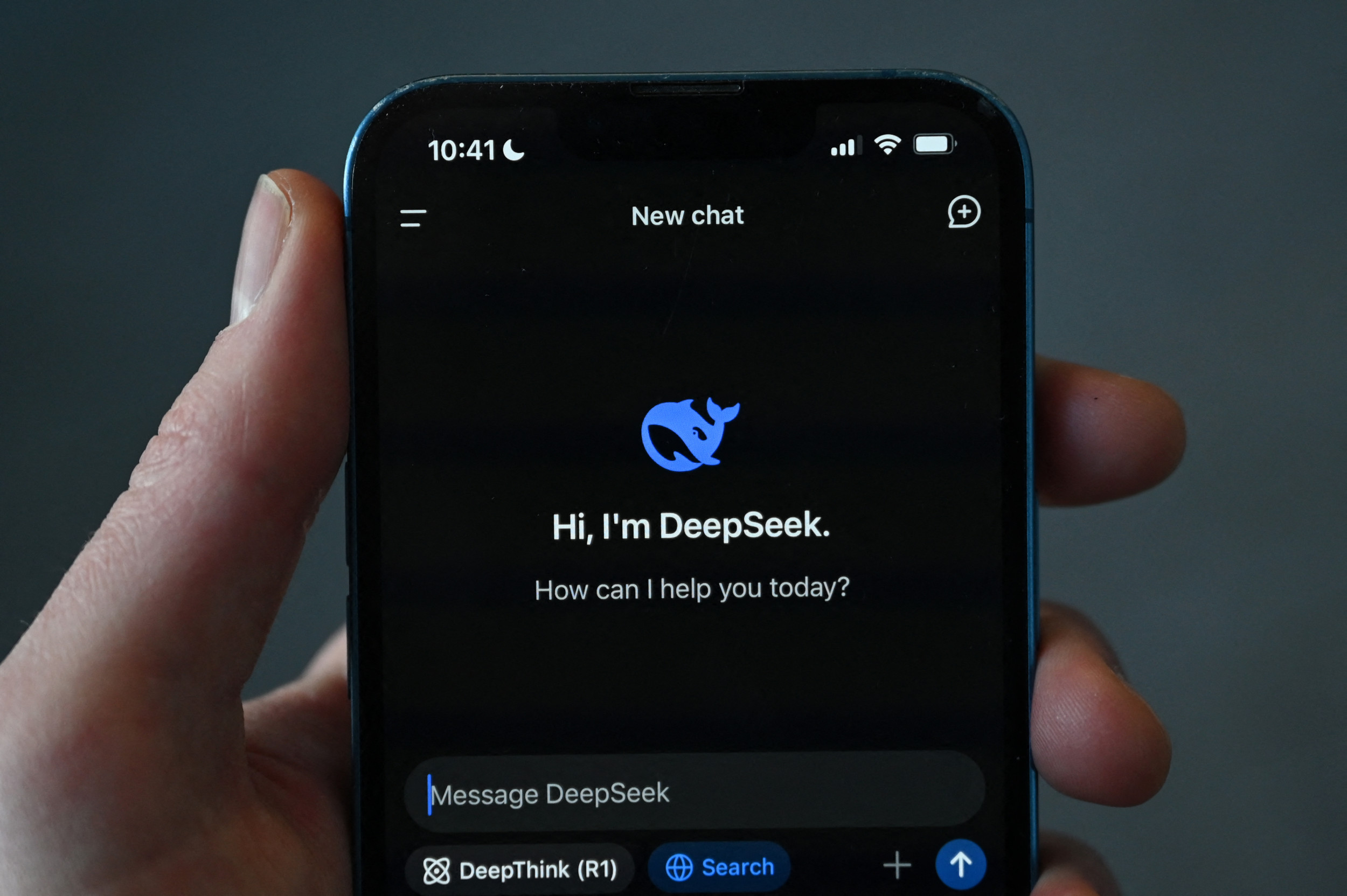
To train its V3 design, DeepSeek utilized a cluster of more than 2,000 Nvidia chips “compared with 10s of countless chips for training models of similar size,” noted the Journal.
Independent analysts from Chatbot Arena, a platform hosted by UC Berkeley researchers, ranked V3 and R1 designs in the top 10 for chatbot efficiency on January 25, the Journal composed.
The CEO behind DeepSeek is Liang Wenfeng, who manages an $8 billion hedge fund. His hedge fund, named High-Flyer, utilized AI chips to develop algorithms to determine “patterns that could affect stock costs,” kept in mind the Financial Times.
Liang’s outsider status assisted him succeed. In 2023, he released DeepSeek to develop human-level AI. “Liang built a remarkable infrastructure group that truly comprehends how the chips worked,” one founder at a competing LLM business informed the Financial Times. “He took his best individuals with him from the hedge fund to DeepSeek.”
DeepSeek benefited when Washington prohibited Nvidia from exporting H100s – Nvidia’s most effective chips – to China. That required local AI companies to craft around the scarcity of the limited computing power of less effective local chips – Nvidia H800s, according to CNBC.
The H800 chips move information between chips at half the H100’s 600-gigabits-per-second rate and are normally less expensive, according to a Medium post by Nscale chief commercial officer Karl Havard. Liang’s team “already understood how to solve this issue,” kept in mind the Financial Times.
To be reasonable, DeepSeek said it had actually stockpiled 10,000 H100 chips prior to October 2022 when the U.S. imposed export controls on them, Liang informed Newsweek. It is uncertain whether DeepSeek used these H100 chips to establish its models.

Microsoft is extremely satisfied with DeepSeek’s achievements. “To see the DeepSeek’s new design, it’s extremely outstanding in terms of both how they have actually successfully done an open-source design that does this inference-time calculate, and is super-compute efficient,” CEO Satya Nadella stated January 22 at the World Economic Forum, according to a CNBC report. “We need to take the advancements out of China extremely, very seriously.”
Will DeepSeek’s Breakthrough Slow The Growth In Demand For Nvidia Chips?
DeepSeek’s success must spur modifications to U.S. AI policy while making Nvidia investors more mindful.
U.S. export limitations to Nvidia put pressure on start-ups like DeepSeek to focus on performance, resource-pooling, and cooperation. To create R1, DeepSeek re-engineered its training procedure to utilize Nvidia H800s’ lower processing speed, former DeepSeek staff member and present Northwestern University computer system science Ph.D. trainee Zihan Wang informed MIT Technology Review.
One Nvidia researcher was enthusiastic about DeepSeek’s achievements. DeepSeek’s paper reporting the results revived memories of pioneering AI programs that mastered parlor game such as chess which were developed “from scratch, without imitating human grandmasters first,” senior Nvidia research study scientist Jim Fan said on X as featured by the Journal.
Will DeepSeek’s success throttle Nvidia’s growth rate? I do not understand. However, based upon my research study, companies plainly desire effective generative AI designs that return their investment. Enterprises will have the ability to do more experiments focused on finding high-payoff generative AI applications, if the cost and time to build those applications is lower.
That’s why R1’s lower cost and shorter time to perform well must continue to attract more commercial interest. An essential to providing what companies want is DeepSeek’s ability at enhancing less effective GPUs.
If more start-ups can duplicate what DeepSeek has actually achieved, there could be less demand for Nvidia’s most costly chips.
I do not know how Nvidia will react ought to this happen. However, in the brief run that might suggest less profits growth as startups – following DeepSeek’s method – develop models with less, lower-priced chips.