

Saiwaijyuku
Overview
-
Sectors Agriculture
Company Description
China’s DeepSeek Surprise
Produced by ElevenLabs and News Over Audio (Noa) using AI narration. Listen to more stories on the Noa app.
One week earlier, a new and powerful challenger for OpenAI’s throne emerged. A Chinese AI start-up, DeepSeek, launched a model that appeared to match the most powerful version of ChatGPT but, a minimum of according to its developer, was a portion of the expense to build. The program, called DeepSeek-R1, has actually incited lots of concern: Ultrapowerful Chinese AI models are exactly what numerous leaders of American AI business feared when they, and more recently President Donald Trump, have actually sounded alarms about a technological race between the United States and individuals’s Republic of China. This is a “wake up call for America,” Alexandr Wang, the CEO of Scale AI, discussed social networks.
But at the same time, many Americans-including much of the tech industry-appear to be admiring this Chinese AI. As of today, DeepSeek had actually overtaken ChatGPT as the top free application on Apple’s mobile-app shop in the United States. Researchers, executives, and financiers have been heaping on appreciation. The new DeepSeek model “is one of the most remarkable and remarkable developments I have actually ever seen,” the investor Marc Andreessen, an outspoken advocate of Trump, composed on X. The program shows “the power of open research,” Yann LeCun, Meta’s chief AI researcher, wrote online.
Indeed, the most notable feature of DeepSeek might be not that it is Chinese, however that it is fairly open. Unlike leading American AI labs-OpenAI, Anthropic, and Google DeepMind-which keep their research almost entirely under covers, DeepSeek has actually made the program’s final code, as well as an in-depth technical explanation of the program, complimentary to see, download, and customize. In other words, any person from any nation, consisting of the U.S., can utilize, adjust, and even improve upon the program. That openness makes DeepSeek a boon for American start-ups and researchers-and an even larger danger to the leading U.S. companies, as well as the federal government’s national-security interests.
To understand what’s so impressive about DeepSeek, one needs to recall to last month, when OpenAI launched its own technical development: the full release of o1, a new kind of AI model that, unlike all the “GPT”-design programs before it, appears able to “reason” through difficult problems. o1 showed leaps in efficiency on some of the most difficult mathematics, coding, and other tests available, and sent out the rest of the AI market rushing to replicate the brand-new thinking model-which OpenAI disclosed extremely couple of technical details about. The start-up, and therefore the American AI market, were on top. (The Atlantic recently entered into a corporate partnership with OpenAI.)
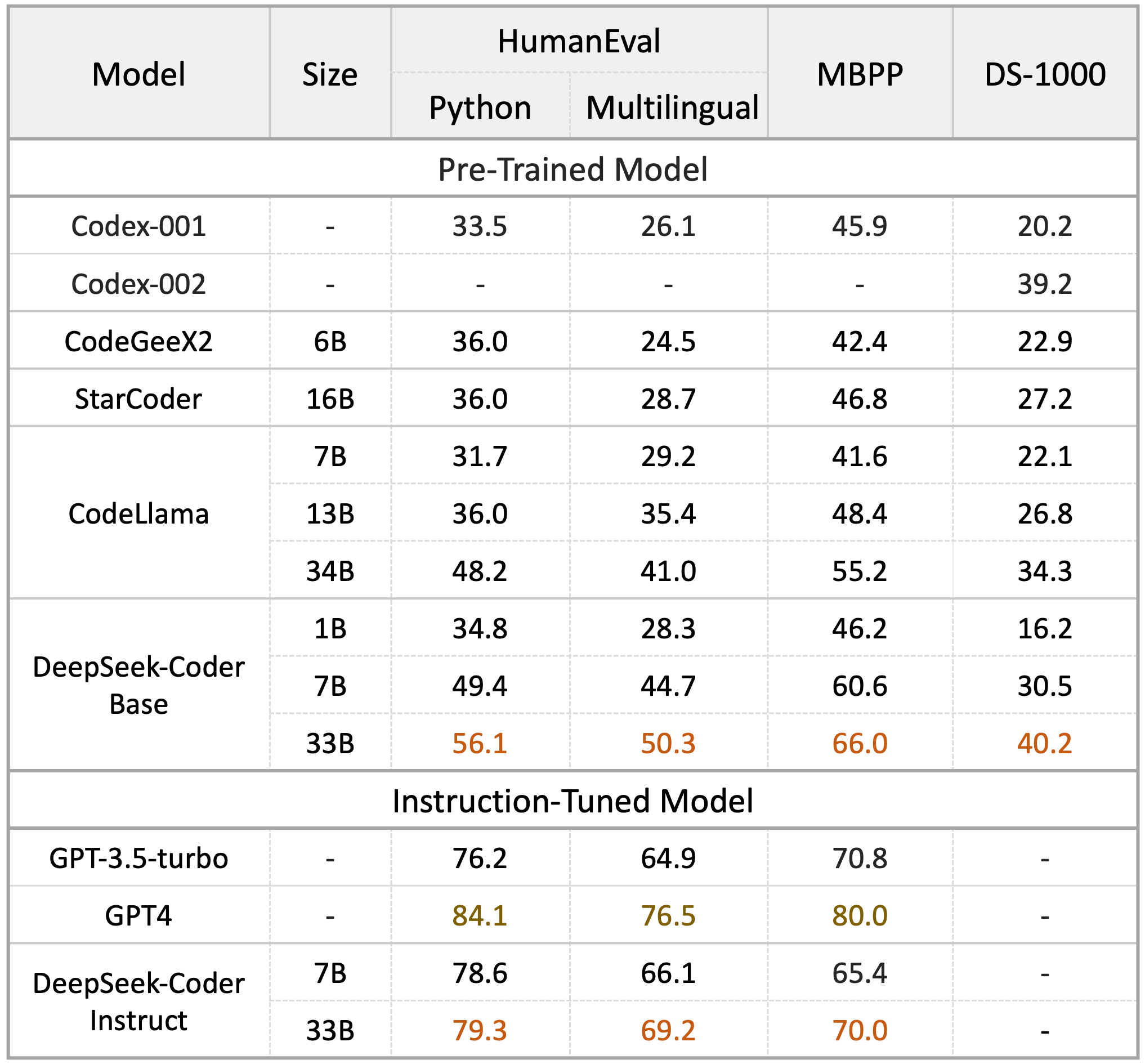
DeepSeek, less than 2 months later on, not only displays those very same “thinking” capabilities apparently at much lower expenses however has actually likewise spilled to the rest of the world a minimum of one method to match OpenAI’s more covert methods. The program is not completely open-source-its training data, for example, and the fine information of its production are not public-but unlike with ChatGPT, Claude, or Gemini, scientists and start-ups can still study the DeepSearch research paper and straight deal with its code. OpenAI has huge amounts of capital, computer chips, and other resources, and has been working on AI for a years. In contrast, DeepSeek is a smaller sized group formed two years ago with far less access to important AI hardware, due to the fact that of U.S. export manages on sophisticated AI chips, but it has depended on numerous software application and performance improvements to catch up. DeepSeek has reported that the final training run of a previous iteration of the model that R1 is constructed from, released last month, expense less than $6 million. Meanwhile, Dario Amodei, the CEO of Anthropic, has stated that U.S. business are currently spending on the order of $1 billion to train future models. Exactly how much the newest DeepSeek cost to build is uncertain-some scientists and executives, consisting of Wang, have cast doubt on simply how low-cost it might have been-but the rate for software developers to integrate DeepSeek-R1 into their own items is approximately 95 percent more affordable than integrating OpenAI’s o1, as determined by the price of every “token”-basically, every word-the model produces.
DeepSeek’s success has actually suddenly required a wedge between Americans most directly bought outcompeting China and those who gain from any access to the very best, most trustworthy AI designs. (It’s a divide that echoes Americans’ attitudes about TikTok-China hawks versus content creators-and other Chinese apps and platforms.) For the start-up and research study community, DeepSeek is a massive win. “A non-US business is keeping the original objective of OpenAI alive,” Jim Fan, a leading AI scientist at the chipmaker Nvidia and a previous OpenAI staff member, wrote on X. “Truly open, frontier research that empowers all.”
But for America’s leading AI companies and the country’s federal government, what DeepSeek represents is unclear. The stocks of numerous significant tech firms-including Nvidia, Alphabet, and Microsoft-dropped today amid the enjoyment around the Chinese design. And Meta, which has branded itself as a champion of open-source designs in contrast to OpenAI, now appears a step behind. (The business is apparently panicking.) To some financiers, all of those enormous information centers, billions of dollars of financial investment, or perhaps the half-a-trillion-dollar AI-infrastructure joint endeavor from OpenAI, Oracle, and SoftBank, which Trump just recently announced from the White House, could appear far less necessary. Maybe bigger AI isn’t better. For those who fear that AI will “the Chinese Communist Party’s international impact,” as OpenAI wrote in a recent lobbying document, this is legally concerning: The DeepSeek app declines to respond to questions about, for example, the Tiananmen Square demonstrations and massacre of 1989 (although the censorship might be reasonably easy to prevent).

None of that is to say the AI boom is over, or will take a drastically various kind moving forward. The next version of OpenAI’s reasoning models, o3, appears far more powerful than o1 and will soon be readily available to the public. There are some indications that DeepSeek trained on ChatGPT outputs (outputting “I’m ChatGPT” when asked what design it is), although perhaps not intentionally-if that holds true, it’s possible that DeepSeek might only get a running start thanks to other high-quality chatbots. America’s AI innovation is accelerating, and its major types are starting to handle a technical research study focus besides thinking: “agents,” or AI systems that can use computers on behalf of human beings. American tech giants could, in the end, even benefit. Satya Nadella, the CEO of Microsoft, framed DeepSeek as a win: More effective AI implies that usage of AI throughout the board will “skyrocket, turning it into a commodity we simply can’t get enough of,” he wrote on X today-which, if real, would assist Microsoft’s revenues as well.
Still, the pressure is on OpenAI, Google, and their rivals to keep their edge. With the release of DeepSeek, the nature of any U.S.-China AI “arms race” has moved. Preventing AI computer system chips and code from infecting China obviously has actually not tamped the ability of researchers and companies situated there to innovate. And the relatively transparent, publicly readily available version of DeepSeek could mean that Chinese programs and approaches, rather than leading American programs, become worldwide technological requirements for AI-akin to how the open-source Linux running system is now basic for major web servers and supercomputers. Being democratic-in the sense of vesting power in software application designers and users-is precisely what has made DeepSeek a success. If Chinese AI preserves its transparency and ease of access, in spite of emerging from an authoritarian routine whose citizens can’t even freely use the web, it is moving in exactly the opposite instructions of where America’s tech market is heading.